
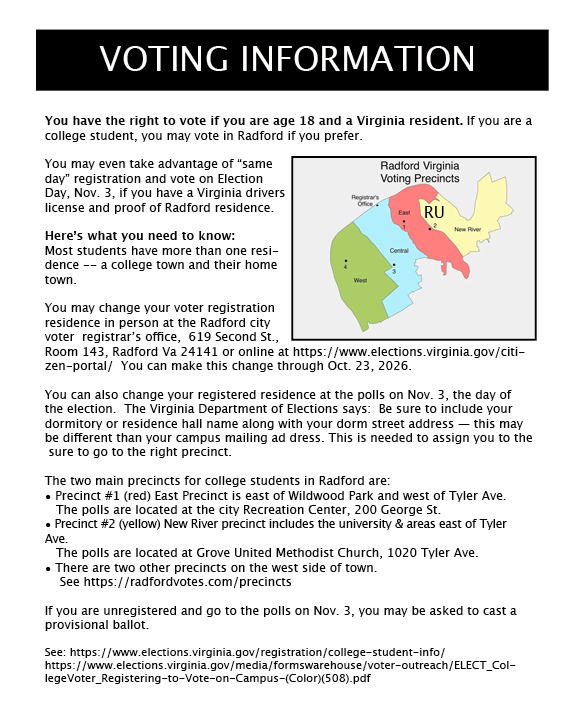
New voting information
Paid for and authorized by Kovarik for City Council.
Comments Off on New voting information
Posted in Uncategorized
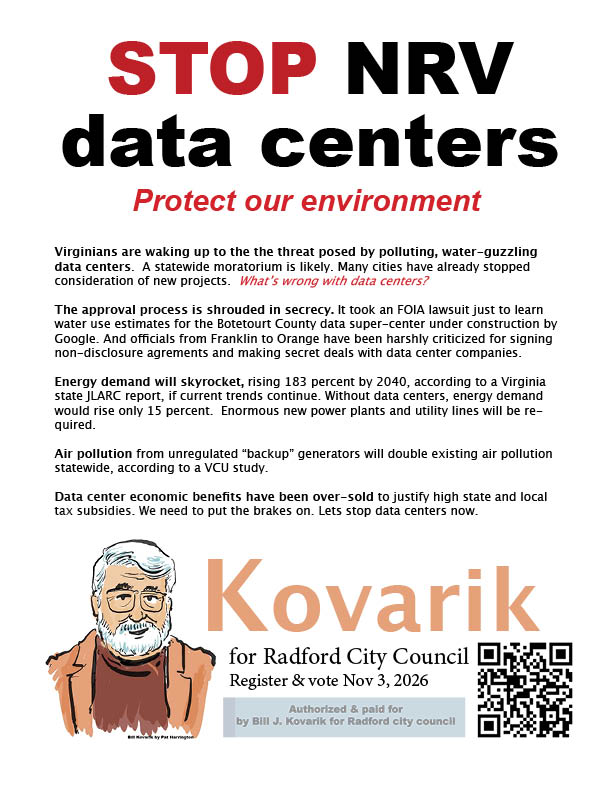
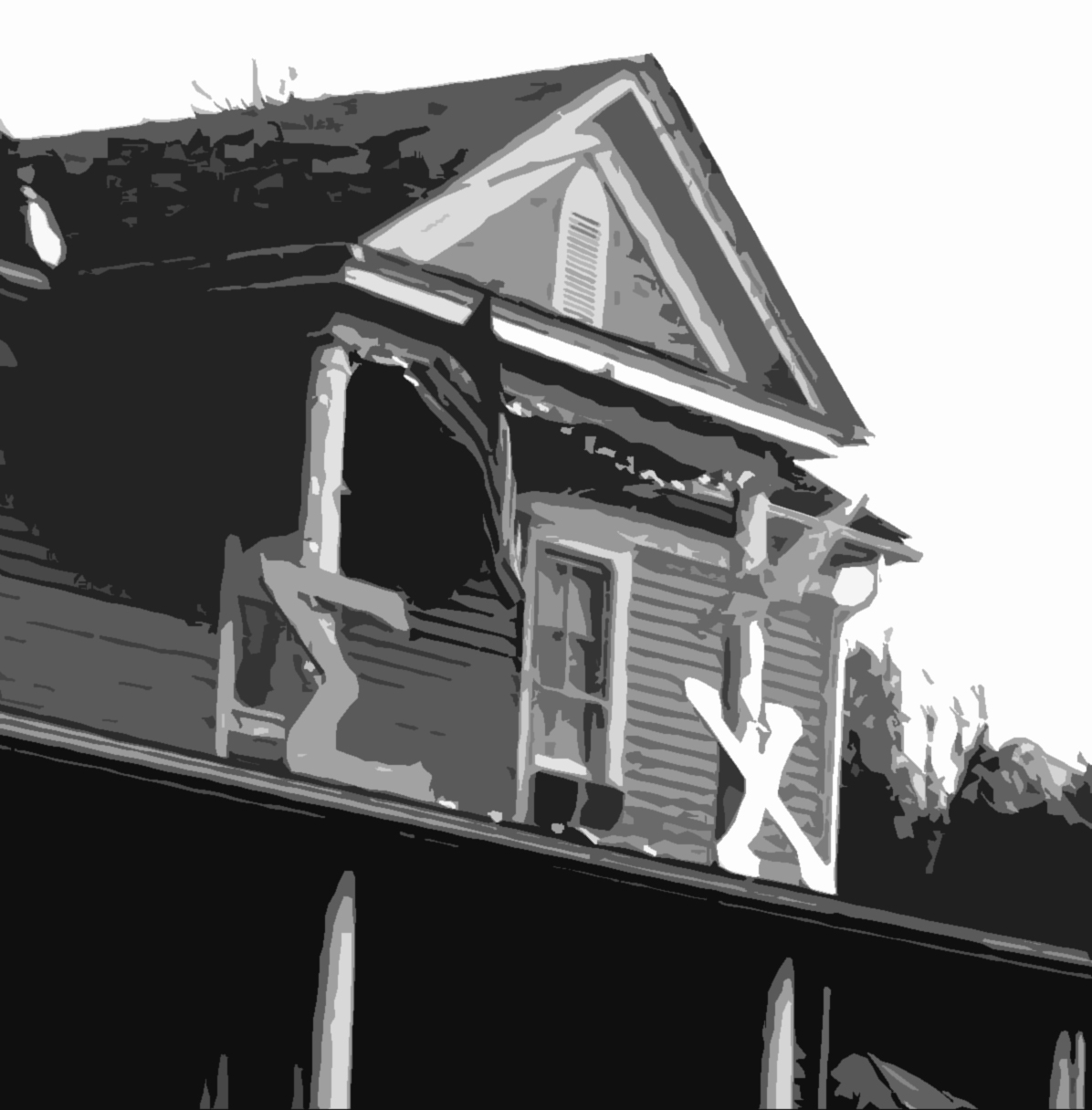
End frat sign bans in Radford
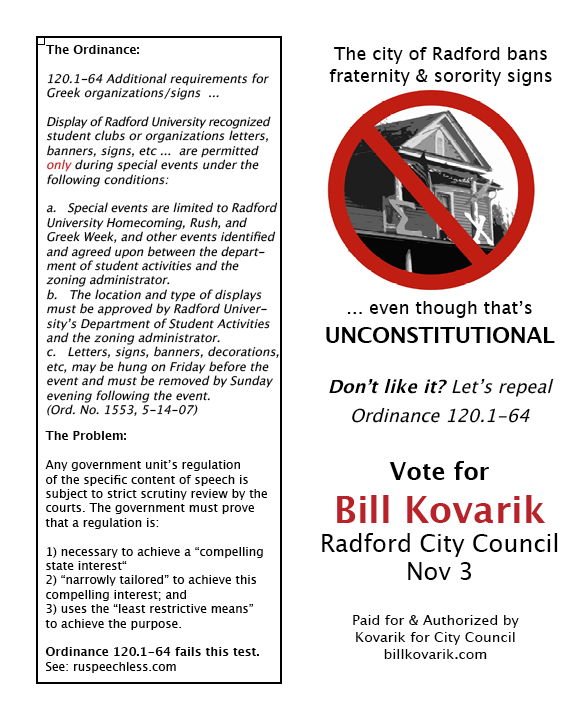
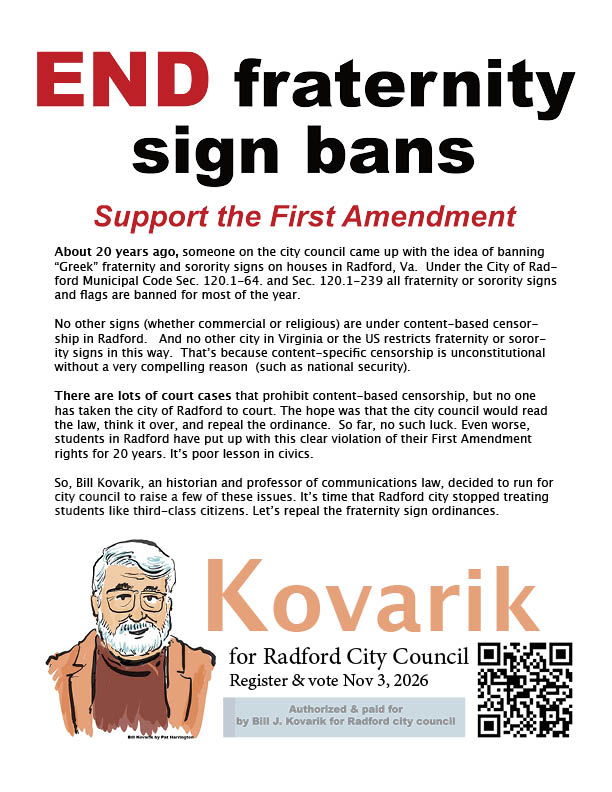
Whenever federal, state or local government creates a law restricting freedom of speech, that unit of government must be able to show that the law serves a legitimate purpose.
And if the law restricts specific content, there is an additional burden on the government under the “strict scrutiny” standard.
Radford’s Greek Sign Ordinances are obviously content specific. Under the City of Radford Municipal Code Sec. 120.1-64. – Additional requirements for Greek organizations/signs, and Sec. 120.1-239. – Additional requirements for Radford University recognized student clubs and organization signs, any “Greek” (fraternity or sorority) signs or flags are banned except during a few special times each year.
No other signs (whether commercial or religious) and no other flags fall under similar content based regulations in Radford.
And no other city in Virginia or the US restricts fraternity or sorority signs in this way.
Continue readingComments Off on End frat sign bans in Radford
Posted in Media law
Candidate background
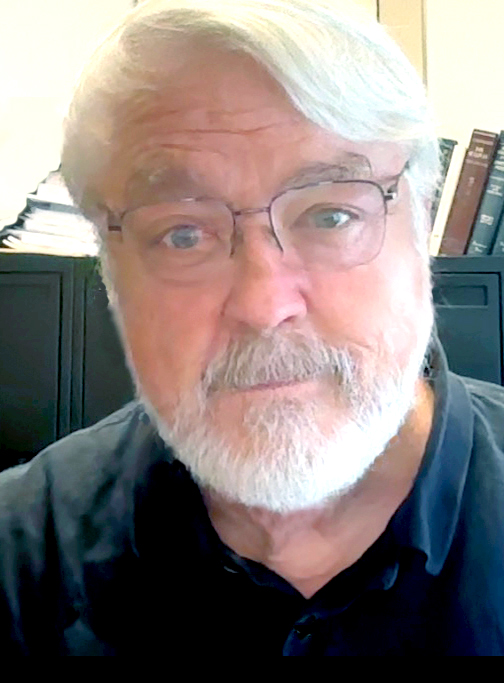
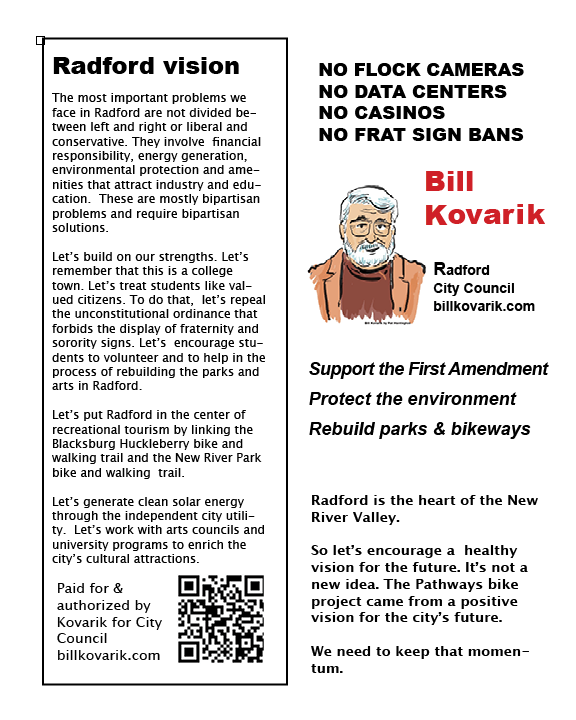
YES, Bill Kovarik is running for Radford City Council in the Nov. 3, 2026 election.
Why? To paraphrase a city podcaster, if Radford were perfect, I wouldn’t be running.
Radford is at a crossroads. We need financial responsibility, more volunteer energy, more communication, environmental protection, and new ideas for the future. And of course, I’m interested in your ideas about this. Write me at bill dot kovarik at gmail dot com.
- Political views:
- I’m a proud member of the Democratic Party and I see the role of government as protecting human rights, the democratic process and the environment for future generations.
- The most important problems we face in Radford are not divided between left and right or liberal and conservative. They have to do with financial responsibility, energy generation, environmental protection, and a large unhoused population. These are mostly bipartisan problems and require bipartisan solutions.
- Open information about city activities is needed. Negotiations over sales of city water to data centers should not be held in secret.
- College students: The city of Radford runs on volunteer energy. We need to encourage that, especially among young people. Instead, city government has alienated students over the past decades with its obviously unconstitutional ordinance restricting the display of fraternity and sorority signs. This is just one of many issues that students have had with city government, and we need to stop treating them like third class citizens.
- Yes, it actually is complicated: Managing government is not easy. You can’t step in and solve problems overnight. Change may be needed, but thoughtful change is required. It’s a slow and steady process. Its not like writing software for a new app. You can’t just “move quickly and break things” in the way that private industry moguls tried in 2025.
- No layoffs: No matter what financial problems Radford is facing, city employees should be valued. The city budget should not be balanced on their checkbooks.
- Religious views: The US Constitution specifically forbids any religious test for public office. However, you might want to know that I attend church regularly in Radford and elsewhere. My denomination is Episcopalian.
- Virginia background: I’ve lived in Radford since 1990 and in Floyd and Blacksburg since 1985. I grew up in the little town of Lee Hall near Ft. Eustis and Newport News, Va. My ancestors had last names like Eley, Day, and Christie and have been living in Virginia since the 1640s. My great-great-grandfather was a colonel in the Confederate army, mortally wounded at Gettysburg, and my grandfathers were both West Point graduates who grew up in the south and retired in northern Virginia.
- Work history: I’ve taught writing, law and communications history at Virginia Tech, Radford and several other universities. I also worked for the New York Times, the Baltimore Sun, the Charleston (SC) Post-Courier, the Associated Press, Time Magazine and other news organizations. Ive written several books and Im working on several more. I was also editor of Appalachian Voice and other specialized and trade publications.
- Carpentry: Ive also worked in the building trades as a project manager, carpenter and house painter.
- Memberships: American Historical Association, Society of Professional Journalists, Society of Environmental Journalists
- Political and management experience: I chaired Radford’s Environmental Improvement Committee for a few years in the 1990s. This was mostly a volunteer cleanup effort that came around every spring. In the mid-1990s I argued that the city was ignoring particulate emissions from the foundry and that it should not dismantle the PM-10 meter that was giving readings far above safe limits.
- I have been elected to positions on boards of directors and trustees for school and environmental groups.
- As a news reporter I’ve spent many hours at city council and county board meetings, mostly in Virginia and South Carolina. I often came away with admiration for the sacrifice of time and effort that elected public servants give. The best public servants work together despite different outlooks for the good of all citizens.
- In Radford these have included mayors Tom Starnes, Bruce Brown and David Horton and council members Richard Harshberger. Robert Nicholson, Jessie Foster and many more. We are lucky to have a system where talented people like these can make contributions to the public good.
Comments Off on Candidate background
Posted in Uncategorized
 Revolutions in Communication
 Mass Media & Environmental Conflict