Category Archives: Media history

How a silent movie informs the current debate over the right to be forgotten

Illustration from the Red Kimono movie poster.

In 1915, Gabrielle Darley killed a New Orleans man who had tricked her into a life of prostitution. She was tried, acquitted of murder and within a few years was living a new life under her married name, Melvin. Then a blockbuster movie, “The Red Kimono,” splashed her sensational story across America’s silver screens.

The 1925 film used Darley’s real name and details of her life taken from transcripts of the murder trial. She sued for invasion of privacy and won.

In deciding in favor of Darley, a California court said that people have a right to rehabilitation. “We should permit [people] to continue in the path of rectitude rather than throw [them] back into a life of shame or crime,” the court said. It is a sentiment that is harder to put into practice today, when information is much more readily available. Nonetheless, policymakers and media outlets are looking at the issue.

As a scholar of media history and law, I see Darley’s story as more than an interesting slice of legal and cinematic history. Her case provides an early example of how private people struggle to escape their pasts and how the idea of privacy is linked to rehabilitation.

How The Conversation is different: All our authors are experts.

Continue reading

Welcome

Klaatu barada nikto

This site was for students and anyone else who might be interested in my historical work, but now also serves as information for my bid for Radford City Council. By way of introduction, here’s a photo taken by Linda Burton in the science fiction gallery of the Seattle Museum of Pop Culture. 

Gort the Robot, shown here, is from The Day the Earth Stood Still, a 1951 movie.  Despite the uncanny resemblance, I’m the handsome one on your right. The museum is  extremely cool, and if you don’t see it next time you’re in Seattle, Gort will know where to find you.

So — Why do historians  like science fiction?  It has something to do with what history is and what it ought to be.

Continue reading

Mainz – The city that invented modernity


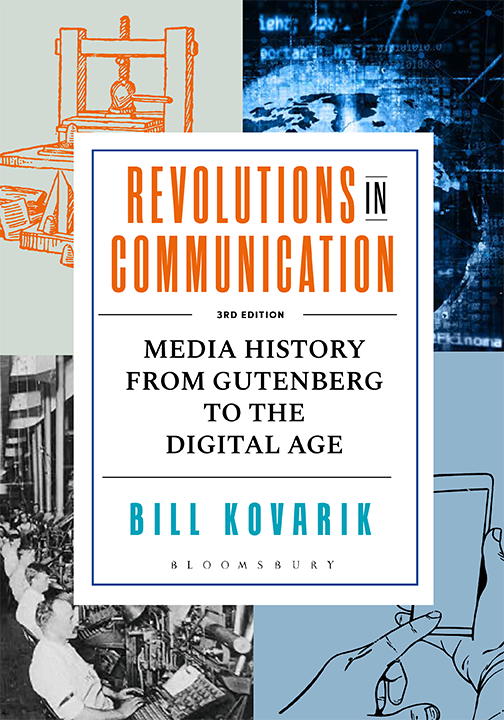
There is an endless fascination with Johannes Gutenberg, the impact of the printing press, and the town of Mainz, Germany where he grew up and began the world’s first major printing operation in the 1450s. You see it in the crowds making something of a pilgrimage to the Gutenberg Museum there, and you see it in the thriving city itself — the flower stalls, the cathedral, the students singing as they pedal the bicycle-powered beer wagons. Madhvi Ramani of the BBC captures this in a May 8, 2018 article, How a German City Changed How We Read, and quotes from my book Revolutions in Communication.
Continue reading